 Storms are severe weather systems that can bring damaging winds, heavy rain, hail, lightning and dangerous surf. In NSW, storms range from short-lived thunderstorms to larger low-pressure systems such as east coast lows.
Thunderstorms
A thunderstorm is a weather system that produces thunder and lightning. Thunderstorms can bring heavy rain, thunder and lightning, hail, strong wind gusts and tornadoes. They are most common from September to March when the ocean is warmer.
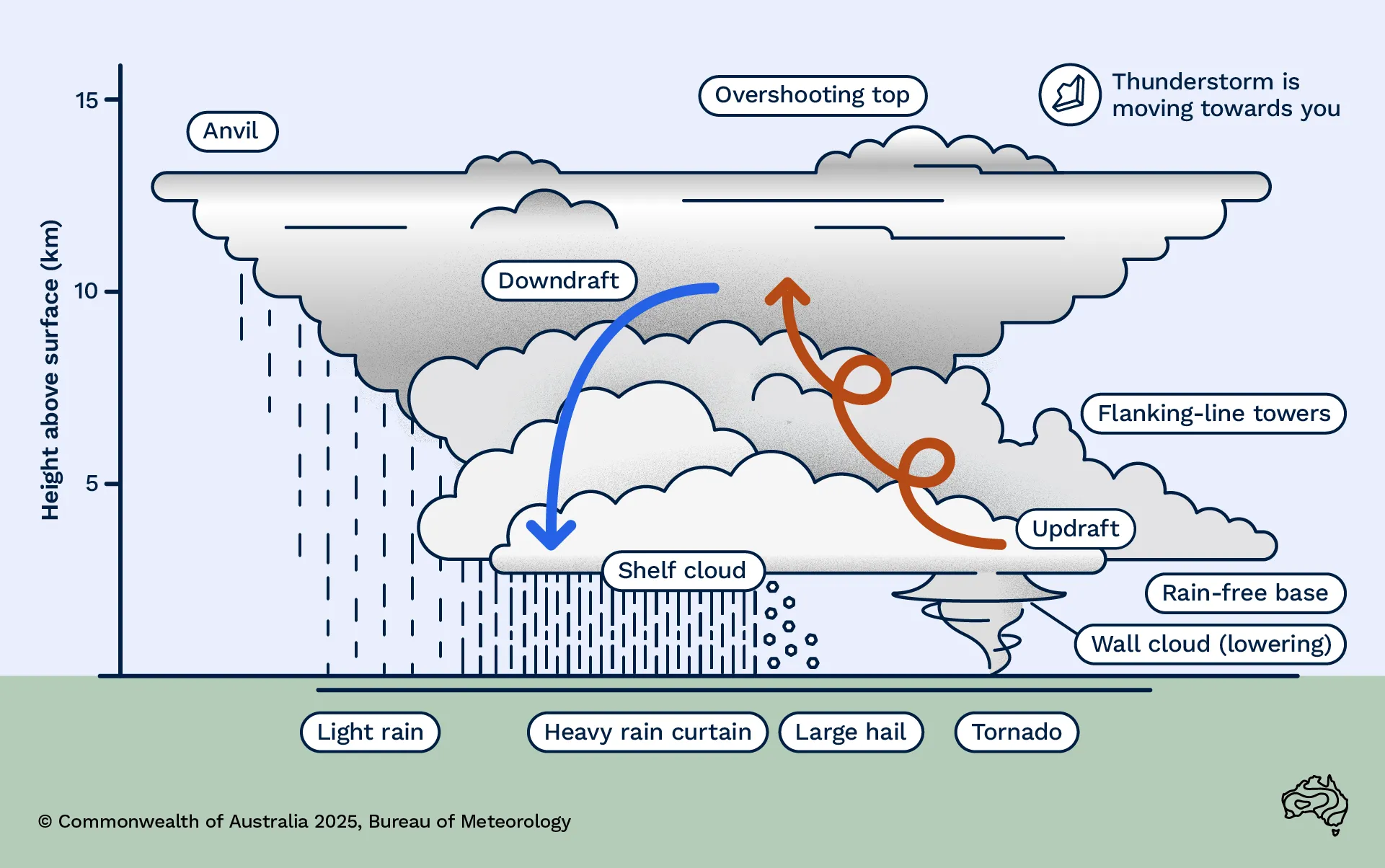
Features of a thunderstorm
Past event: 8 and 9 October 2007
- Supercell thunderstorms hit Lismore causing widespread damage, producing large hail and strong winds.
- Estimated damage of $200 million*
- 17 people were injured and NSW SES received around 300 requests for assistance.
*Insurance Council of Australia damage estimates in current day values
Current risk
- The Northern Rivers experiences a high number of thunderstorms each year and has some of the most hail damage in NSW.
- While most hailstorms cause small to moderate damage, the high frequency of hail in the region means impacts build over time.
Future risk
- Climate projections suggest more intense short-duration heavy rainfall, even in regions where the average rainfall decreases or stays the same. However, there is still uncertainty about how this will affect thunderstorms, including large hail events.
- More research is needed across Australia to better understand how thunderstorms may change in the future.
- Overall, the risk from thunderstorms in the Northern Rivers is expected to increase over time due to continued population growth across the region.
Impacts

|
Built
|

|
Social
|

|
Economic
|

|
Natural
|
Next steps
Note: The information contained on these Have Your Say website pages is general information only, based on knowledge and understanding at the time of publication (June 2026) or otherwise based on data which pre-dates its publication, and may be subject to change at any time without notice. The State of NSW and its agencies (including the NSW Reconstruction Authority) do not give any warranty or representation as to the accuracy, reliability or completeness of the information. Read our full legal notice at bottom of the Have Your Say landing page.