
A heatwave occurs when maximum and minimum temperatures are unusually high over a three-day period at a specific location. Heatwaves build up slowly and are considered the deadliest natural hazard in Australia.
Heatwave conditions
Under normal circumstances, heat builds up during the day and is discharged overnight. During a heatwave there is more excess heat during the day and less discharge of this heat overnight, resulting in increasing excess heat over time.
Heatwaves put pressure on people’s health, emergency and essential services like power and water.
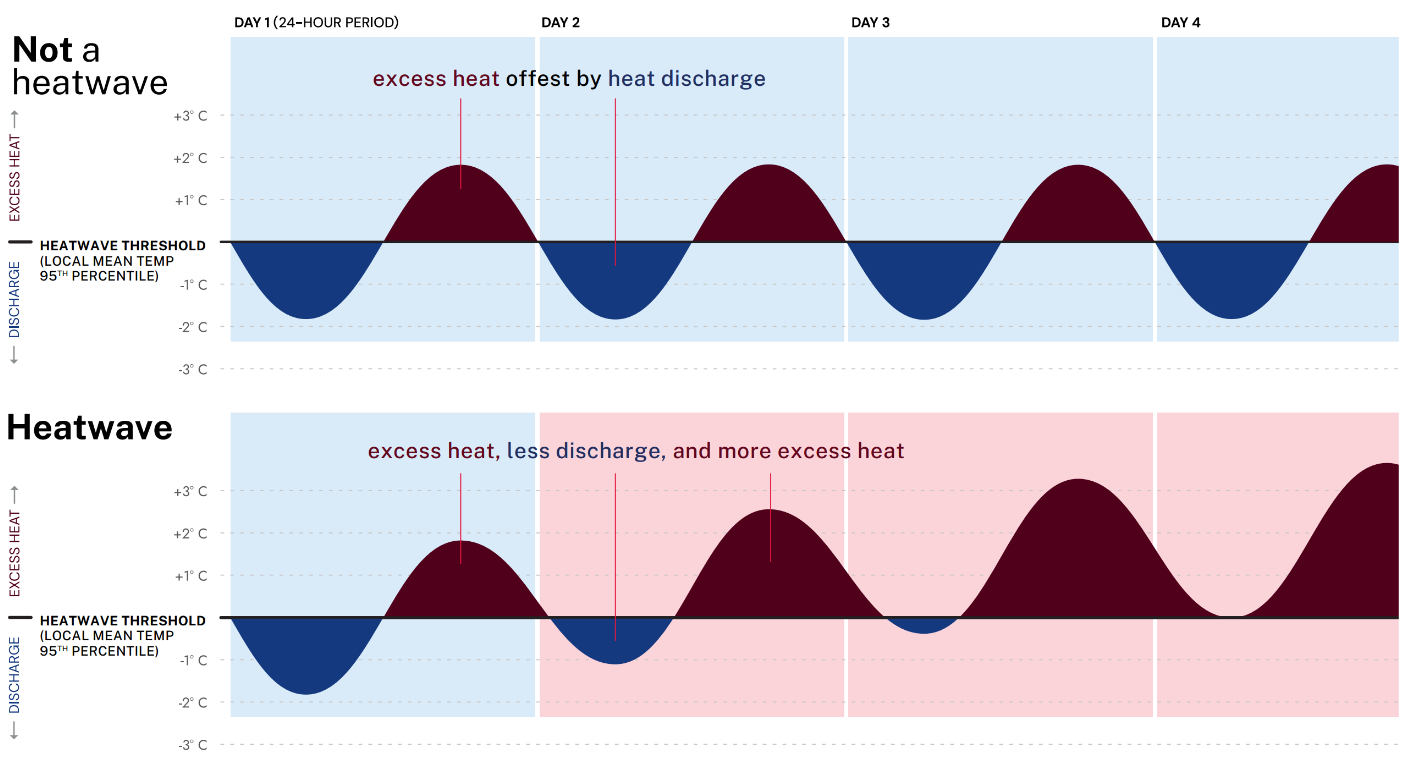
Source: MacClune, K., Rubenstein, N., Norton, R., Pestalozzi, A., Keating, A., 2026
Recent event: November 2025
- A severe to extreme heatwave occurred across the Northern Rivers and lasted for 6 consecutive days.
- Grafton reached 38°C, Casino 37°C and Lismore 36°C.
- Health services reported increased demand for medical assistance and heat-related illness presentations.
Current and future risk
Heatwave intensity in the Northern Rivers
Heatwave intensity is measured using an excess heat factor (EHF) index – which measures how much of a shock to the body the forecast temperature will be. This index measures modelling for heatwave across NSW. The map below shows the Northern Rivers having the highest EHF in NSW.
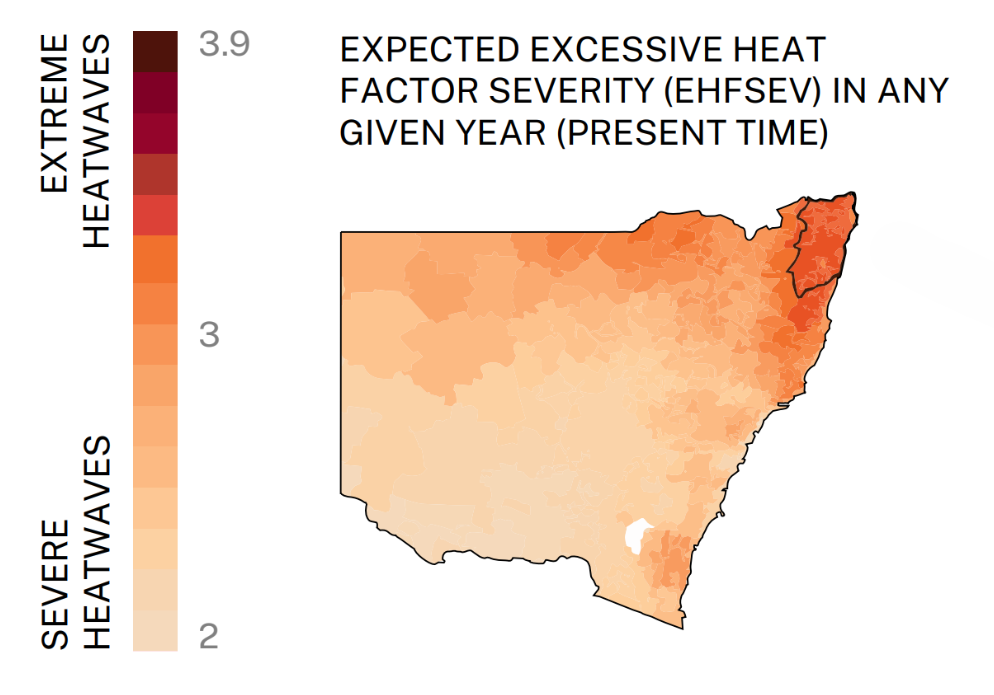
Data source: NARCliM2.0 climate data, post-processed by Taylor Fry/Risk Frontiers
Heatwave intensity over time
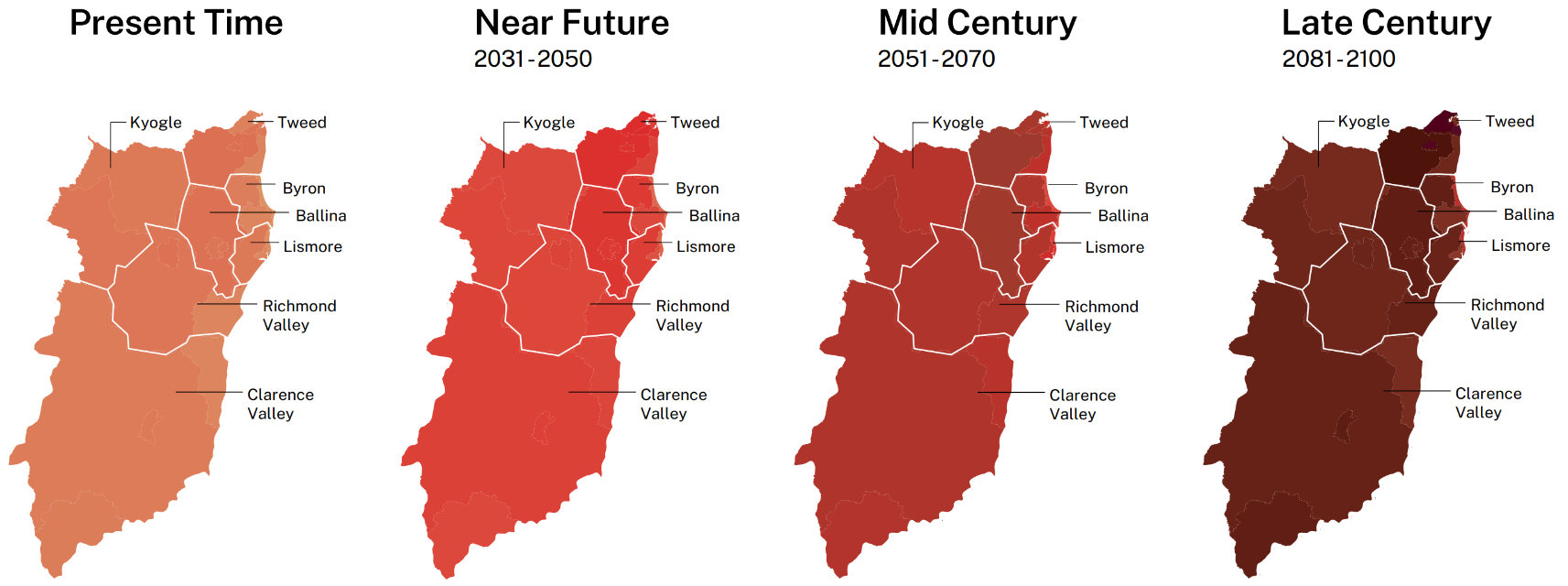
Data source: NARCliM2.0 climate data, post-processed by Taylor Fry/Risk Frontiers
Current risk
- The Northern Rivers has the highest heatwave intensity of any region in NSW.
- There is a 17% chance of an extreme heatwave in the Northern Rivers in any given year.
- Heatwaves can happen anywhere in the Northern Rivers.
- Towns and built up areas also get hotter because concrete and buildings hold onto heat.
- They usually occur in summer, but can happen at other times when very hot, still weather settles over the region.
Future risk
- Over time, heatwave risk in the Northern Rivers will increase as a result of climate change and population growth.
- Heatwave intensity is expected to increase from present day severe heatwaves, to extreme heatwaves by the end of the century.
- By 2090, the annual likelihood of an extreme heatwave is projected to increase to around 45% (from 17% currently).
Impacts

|
Built
|

|
Social
|

|
Economic
|

|
Natural
|
Next steps
Note: The information contained on these Have Your Say website pages is general information only, based on knowledge and understanding at the time of publication (June 2026) or otherwise based on data which pre-dates its publication, and may be subject to change at any time without notice. The State of NSW and its agencies (including the NSW Reconstruction Authority) do not give any warranty or representation as to the accuracy, reliability or completeness of the information. Read our full legal notice at bottom of the Have Your Say landing page.