We are seeking your feedback on proposed programs aimed at rebuilding the biomass of depleted and recovering fish species in NSW
The proposed rebuilding programs include species-specific changes for the commercial, recreational, and charter sectors to reduce fishing mortality and support additional recruitment of Grey Morwong, Silver Trevally, Pearl Perch, and Redfish.
All feedback will be considered alongside the following principles:
- Programs and management actions should be designed to rebuild stock biomass to sustainable levels within biologically appropriate timeframes, in accordance with State and Commonwealth legislation and sustainability guidelines.
- Consistent contributions to reduce fishing mortality should be provided across the commercial and recreational fishing sectors.
Species summaries and proposed changes
Grey Morwong biomass is critically low (estimated at 11%) and NSW is responsible for around 66% of total annual harvest (Status of Australian Fish Stocks 2023), equivalent to a recent annual average of approximately 40 tonnes.
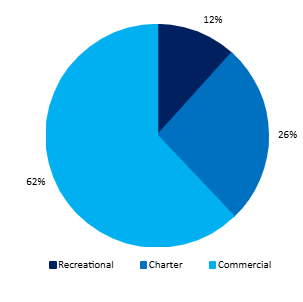
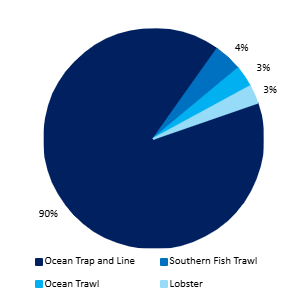
Summary of rebuilding program
Rebuilding objective: To rebuild stock biomass to 20% of unfished levels within 3 generations (11 years) and continue progress biomass to a target of 40% of unfished biomass.
Approach: Targeted rebuilding, with initial management changes to significantly reduce current harvest (fishing mortality).
Estimated reduction in harvest level: 50%
What changes are proposed?
Current and proposed management changes are provided in Table 1. The arrangements will be reviewed within 5 years from commencement against the rebuilding program objectives and progression of biomass towards target levels.
Table 1: Grey Morwong: Current and initial management changes to support stock rebuilding
| Sector | Management control | Current arrangements | Proposed arrangements | Estimated catch reduction |
| Commercial | Minimum Size limit | 30 cm | No change | - |
| Bag/possession limit | - | Ocean Trawl and Southern Fish Trawl: 50 kg Ocean Trap and Line: 10 kg All other commercial: 0 kg | 51% combined | |
| Recreational | Minimum Size limit Bag/possession limit | 30 cm 10 | Option 1 (proposed):
| 18% recreational/11% charter 38% recreational/charter |
| Option 2:
| - 33% recreational/31% charter Insufficient data to model 24% charter |
Silver Trevally biomass has likely been below 20% for the last two decades. A Tier 1 assessment suggests there may have been some recent improvement, but the model has considerable uncertainty. NSW is responsible for around 37% of total harvest of the east coast stock (DPIRD 2023), equivalent to a recent annual average of approximately 58 tonnes.
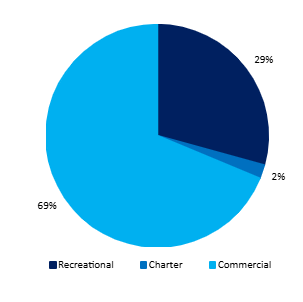
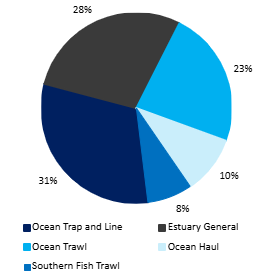
Summary of rebuilding program
Rebuilding objective: To support progression of stock biomass to 20% of unfished biomass with high probability within 15 years (mean generation time + 10 years).
Approach: Support further rebuilding, with management changes contributing to reduce current harvest (fishing mortality).
Estimated reduction in harvest level: 20%
What changes are proposed?
Current and proposed management changes are provided in Table 2. The arrangements will be reviewed within 5 years from commencement against the rebuilding program objectives and progression of biomass towards target levels.
Table 2: Silver Trevally: Current and initial management changes to support stock rebuilding
| Sector | Management control | Current arrangements | Proposed arrangements | Estimated catch reduction |
| Commercial | Minimum Size limit | 30 cm | No change | - |
| Bag/possession limit | Ocean Trawl Total Allowable Catch | Southern Fish Trawl and Ocean Hauling: 300 kg Estuary General: 70 kg Ocean Trap and Line: 40 kg All other commercial: 0 kg | 22% combined (Excluding Ocean Trawl) The Ocean Trawl TAC was reduced by 55% between 2020/21 and 2023/24 | |
| Recreational | Minimum Size limit Bag/possession limit | 30 cm 10 | Option 1 (proposed):
| - 21% recreational/22% charter |
| Option 2:
| 23% recreational/charter <1% recreational/1% charter | |||
| Option 3:
| - 7% recreational/7% charter Insufficient data to model 13% charter |
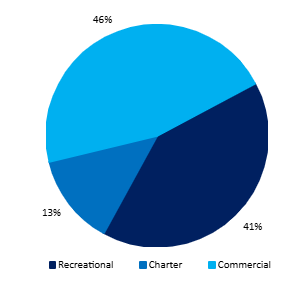
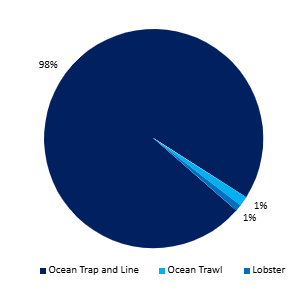
Pearl Perch is primarily taken in Queensland (especially historically). The 2017 stock assessment suggested that the biomass was likely at or below 20% and fishing mortality exceeded a sustainable level, leading Queensland to implement new catch controls including a seasonal spawning closure, size limit increase to 38cm, and reduction in the recreational possession limit. The biomass estimate from the most recent 2022 stock assessment is around 22%, with high uncertainty. NSW is responsible for around 35% of total harvest of the east coast stock (Status of Australian Fish Stocks 2023), equivalent to a recent annual average of approximately 18 tonnes.
Summary of rebuilding program
Rebuilding objective: To assist rebuilding of the Eastern Australia Pearl Perch stock above 20% of unfished spawning biomass within approximately 15.5 years (mean generation time + 10 years.
Approach: Support rebuilding, with management changes to reduce harvest (fishing mortality) and promote recruitment (spawning capacity).
Estimated reduction in harvest level: 22%
What changes are proposed?
Current and proposed management changes are provided in Table 3. The arrangements will be reviewed within 5 years from commencement against the rebuilding program objectives and progression of biomass towards target levels.
Table 3: Pearl Perch: Current and initial management changes to support stock rebuilding
| Sector | Management control | Current arrangements | Proposed arrangements | Estimated catch reduction |
| Commercial | Minimum Size limit | 30 cm | 38 cm | 23% commercial |
| Recreational | Minimum Size limit Bag/possession limit | 30 cm 5 | 38 cm Bag/possession limit: 4 | 17% recreational 4% recreational |
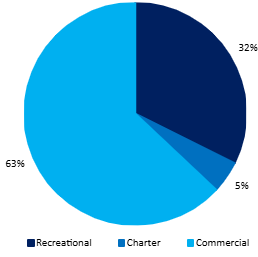
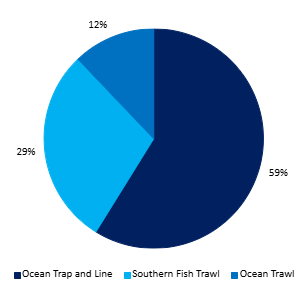
Redfish biomass is critically low (estimated at 4% or less) and the species is being considered for listing as Critically Endangered under the Commonwealth Environment Protection and Biodiversity Conservation Act 1999. The outcomes of the listing process may affect the final arrangements for this species. NSW takes around 29% of the catch (Status of Australian Fish Stocks 2023), equivalent to a recent annual average of approximately 11 tonnes.
Summary of rebuilding program
Rebuilding objective: To assist rebuilding the South Eastern Australian Redfish biological stock above 20% of unfished biomass (B20) or proxy by 2042.
Approach: Support rebuilding, with management changes to reduce harvest (fishing mortality) and promote recruitment (spawning capacity).
Estimated reduction in harvest level: 30%
What changes are proposed?
Current and proposed management changes are provided in Table 4. The arrangements will be reviewed within 5 years from commencement against the rebuilding program objectives and progression of biomass towards target levels.
Table 4: Redfish: Current and initial management changes to support stock rebuilding
| Sector | Management control | Current arrangements | Proposed arrangements | Estimated catch reduction |
| Commercial | Minimum Size limit | - | 25 cm | 33-95% commercial (high uncertainty due to limited data) |
| Bag/possession limit | Trip limits for Otter trawl net (fish) in Ocean Trawl & Southern Fish Trawl: 100kg south of Barrenjoey Head 250 kg north of Barrenjoey Head (1 November – 30 June) 1000 kg north of Barrenjoey Head (1 July – 31 October) | Ocean Trawl, Southern Fish Trawl and Ocean Trap and Line: 40 kg All other commercial: 0 kg | 31% combined | |
| Recreational | Minimum Size limit | - | 25 cm | 14% recreational/charter |
| Bag/possession limit | 20 | Bag/possession limit: 1 | 23% recreational/charter based on charter proxy data |
Tell us what you think
Have your say by filling in a submission form below.
Consultation will be open from 9:00am Friday 28 November 2025 until 11:59pm 31 January 2026.
Your feedback will help to finalise the rebuilding programs and management actions to improve the long-term health of these important stocks.
Please review the tables above that outline the proposed changes to our management rules.